Residential Elevator Cost & Feasibility Guide
Installing a residential elevator can greatly improve accessibility and even boost your home’s value, but both cost and feasibility are critical to consider up front. The price tag for a home elevator varies widely, from around $15,000 on the low end to over $50,000, depending on factors like the model, number of floors served, and custom features.
However, an even more fundamental question is “Can my home accommodate an elevator?” In many cases, the structural feasibility and necessary modifications will drive the project’s complexity (and thus cost) more than the elevator unit itself. For example, a retrofit in an existing house may require significant demolition and reconstruction, or even adding an exterior shaft if the interior cannot fit an elevator.
In short, the feasibility of installation often matters more than price alone. There’s little point in quoting costs until you know what your home can support. Below, we’ll break down the key cost drivers, types of home elevators, how to evaluate your home’s suitability, typical price ranges, and important code considerations for Ohio, Indiana, and Michigan.
What Determines Residential Elevator Cost?
Several factors determine the cost of a home elevator installation, beyond just the elevator unit’s base price. Understanding these variables will help you estimate your budget more accurately:
Travel Height & Number of Stops: The more floors or vertical distance an elevator must travel, the higher the cost. Each additional stop or level adds expense in terms of extra track/rail, taller hoistway construction, and more complex controls. Premier Elevator notes you should allocate an extra ~$1,000–$3,000 for every floor beyond the first. For example, a basic two-stop elevator might start around $25,000, but a four-stop elevator could end up $5,000–$10,000 more. It’s also important to choose the right type of lift for your home’s height. For example, shaftless lifts are generally not suitable beyond two stories.
New Build vs. Retrofit: Installing an elevator during new construction is much more cost-effective than retrofitting one into an existing home. If you can plan for an elevator from the start, you avoid expensive demolition or structural changes later. In fact, adding an elevator in a new build can “save you big time” compared to a post-construction retrofit. Retrofitting often requires cutting through floors or rerouting utilities, and may even require building an exterior addition if interior space is limited. All this extra construction drives up the total cost (and timeline) significantly.
Structural Conditions: The condition and layout of your home’s structure will heavily influence installation costs. Key questions include: Does a shaft/hoistway need to be built, and if so, will it require reinforcing existing floors or walls? Will you need to cut through any floor joists or relocate plumbing/HVAC lines? Structural modifications like adding support beams or headers around an elevator opening can add labor and material expense. Limited space inside the home might necessitate constructing an exterior hoistway structure, which also increases cost. In short, the more your home needs to be altered to fit the elevator, the higher the installation cost.
Electrical & Machine Requirements: Elevators have specific power and machinery needs that can impact cost. Most residential elevators require both standard 120V circuits (for cab lighting and controls) and a 220V circuit for the lift motor. If your electrical panel isn’t sufficient, an upgrade ($500–$1,800) may be needed. Additionally, certain drive systems (like hydraulic pumps) might require space for a machine room or cabinet. Ensuring you have room for and access to this equipment is part of feasibility. If the existing wiring, panel, or electrical service can’t support the elevator, those upgrades will add to the project cost.
Types of Residential Elevators Explained
Not all home elevators are built alike – there are a few different types of residential elevator systems, each with its own pros, cons, and cost range. Below, we explain the main categories, from traditional in-shaft elevators to newer shaftless designs, with real-world advantages and disadvantages (beyond the marketing hype):
Traditional Shafted Elevators
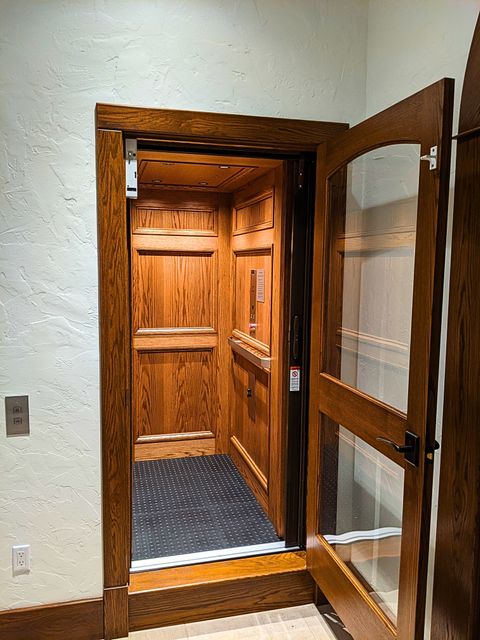
Traditional residential elevators are the kind you might picture in a commercial setting, scaled down for home use. They operate within a constructed shaft/hoistway and typically use either a hydraulic piston, a cable-and-counterweight traction system, or a winding drum to move the cab between floors. These elevators require more extensive construction: a reinforced shaft enclosure, usually a pit (often ~8–12 inches deep) at the bottom for the cab to sit level with the lowest floor, and some overhead clearance for machinery at the top. They can serve multiple stories (commonly anywhere from 2 up to 4+ floors, depending on the model) and have higher weight capacities – often 750 to 950 pounds for home models.
Pros: A smooth ride and robust lifting power, suitable for wheelchairs and multiple passengers. They integrate well into new construction and can add resale value as a “real elevator”. They also typically come with automatic or sliding doors and more cabin size/finish options. Cons: Cost is higher due to the elevator equipment and the required shaft construction. On average, a basic two-stop hydraulic or cable-driven home elevator in our region costs roughly $25,000 to $50,000 installed, and more complex custom elevators can exceed that. You’ll also need to account for space taken up by the shaft – usually around 12–15 sq. ft per floor – which can be a challenge in smaller homes.
Through-Floor Elevators
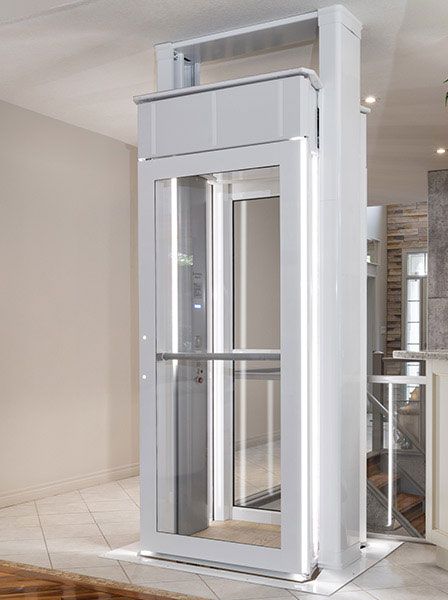
Through-floor elevators, also known as shaftless home lifts, are a compact alternative that do not require a full elevator shaft built into the home. Instead, these units travel through a simple cut-out in the floor between two levels. When the elevator is on the lower level, the ceiling/floor opening is closed off (often by the elevator’s own floor or a trap door) – and when it rises to the upper level, it leaves an opening in the floor it came from. Through-floor elevators are almost always limited to two stops (one floor of travel), typically connecting a ground floor and an upper floor. They are generally designed for single-person or wheelchair use and have a smaller cab footprint, which makes them feasible for retrofitting into tight spaces. Installation is simpler than a traditional elevator since there’s no need to build a full hoistway; the unit often comes with an integrated enclosure and is anchored to the floor opening or nearby wall. Some models can even be installed against an exterior wall and travel through a door-sized opening between levels, which is useful if interior space is extremely limited.
Pros: Requires much less construction work – just the floor cut-out and some minor structural framing to support the opening. No deep pit excavation is needed in most cases (sometimes a shallow recess or ramp instead), and no separate machine room is required. Through-floor lifts are compact and convenient for existing homes, and usually cost less than full-size elevators.
Cons: They can only serve two levels and usually have a lower weight capacity (often around 500–750 lbs). The cab is small – often just enough for one person or a person in a wheelchair plus maybe a caregiver. Aesthetically, they are more visible in the room since there isn’t a concealed shaft – you’ll see the lift unit or a portion of it on one floor or the other.
Costs: Investing in a shaftless through-floor elevator is relatively affordable as an accessibility solution, with units ranging roughly $20,000 to $35,000 in many cases. Higher-end customizations (like glass walls or upscale interior finishes) can push those costs upward of $40,000, plus installation fees.
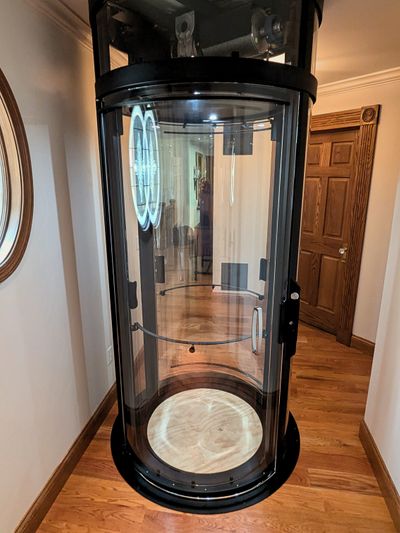
Shaftless & Compact Elevator Systems
Shaftless and compact residential elevator systems are often promoted as easy installs or minimal construction solutions. In practice, Premier Elevator & Lift evaluates these systems very carefully on a case-by-case basis, because feasibility depends far more on the home’s structure than on the elevator model itself.
Unlike traditional residential elevators, shaftless systems do not use a full enclosed hoistway, which can make them appealing for certain homes. However, that same characteristic also introduces important limitations.
When Shaftless Systems May Be Considered
Based on Premier’s installation experience, shaftless or compact elevator systems are typically evaluated only when:
The home is limited to two levels of travel
Interior space does not allow for a traditional shaft
The homeowner’s primary goal is basic accessibility, not multi-passenger use
Structural conditions allow for a safe floor opening without compromising load paths
Ceiling heights and floor construction meet manufacturer and code requirements
These systems are not a universal solution and are not appropriate for every home.
Real-World Limitations to Understand
Premier often advises homeowners to understand the following considerations before pursuing a shaftless system:
Limited travel – Generally restricted to serving one floor above or below
Smaller platform or cab size – Not suitable for larger wheelchairs or multiple occupants
Structural dependency – Floor framing, joist direction, and load transfer must be evaluated carefully
Future flexibility – Shaftless systems offer fewer upgrade or expansion options than traditional elevators
Aesthetic impact – Because there is no enclosed shaft, the elevator may remain visible within living spaces
In many cases, what initially appears to be a “simpler” solution can become less practical or more restrictive once real-world use is considered.
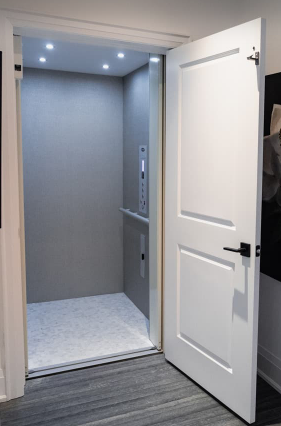
Premier’s Approach to Shaftless Feasibility
Rather than selling you an elevator type just to get a sale, Premier Elevator & Lift starts the process with a home evaluation to ensure you’re getting the best fit for your home and lifestyle.
During a feasibility review, we assess:
Structural conditions and floor framing
Safe load paths to the foundation
Ceiling height and clearance requirements
Code compliance for residential use
Long-term usability for the homeowner’s needs
If a shaftless or compact system is appropriate, Premier will explain why.
If it is not, Premier will explain what limitations exist and what alternatives make more sense, often saving homeowners from costly mistakes.
Is Your Home a Good Candidate?
Even a small home elevator is a significant installation. So, how do you know if your house is a good candidate for one? Here are some key feasibility points to evaluate in your home:
Floor Joist Direction & Structure: Look at how your floor joists run and where an elevator could pass between them. Ideally, you have a spot where a hole can be cut for the elevator without cutting through too many joists. If an opening requires modifying joists, a builder will need to frame out a header (similar to creating a stairwell opening) and reinforce the surrounding structure. It’s absolutely doable – contractors do it for staircases and elevators routinely – but more structural work means more cost. Houses with stacked closets or unused vertical shafts (like a double-height space) are easiest, since you can convert that space to an elevator shaft with minimal structural change. Conversely, if your desired elevator location cuts across major support beams or many joists, you might need to reconsider the placement or beef up the framing significantly (which Premier can assess for you during a site evaluation).
Stair Placement & Traffic Flow: Many home elevators are located near existing staircases or in areas that align with upstairs hallways for convenience. When planning, ensure the elevator won’t block critical pathways. Importantly, you cannot remove your home’s only staircase and replace it with an elevator – building codes require at least one functional stairway in a residence at all times. If you have a multi-story home, think about how an elevator could serve those levels: Is there a hallway or closet stack where it can go? Is it near the stairs (common for homeowners who want an alternative to climbing the staircase)? Also consider who will use it – for elderly or mobility-impaired users, having the elevator access convenient to bedrooms and main living areas is ideal.
Load Paths & Floor Support: A residential elevator will concentrate weight on certain points (the rails or hydraulics at the base and possibly at the top). Your home’s structure must support these loads safely. In practical terms, this might mean pouring a new concrete footing in a crawlspace or basement where the elevator will sit, or reinforcing the floor if it’s not on a slab. Premier Elevator notes that sometimes walls or floors need reinforcing to accommodate an elevator. The total weight of a home elevator system can be substantial (some hydraulic elevators weigh 2,000+ lbs plus passengers), but a qualified installer/engineer will calculate if your floor system can handle it. As part of feasibility, they’ll check that the load is transferred to the foundation – either directly under the elevator or via added supports. If not, structural work will be required to create a safe load path.
Ceiling Height & Clearance: Different elevator types have different overhead clearance requirements. A traditional elevator typically needs a certain amount of space above the top landing for the cab and mechanisms (often an 8-foot or higher ceiling at the top floor is needed). Ceiling height constraints can limit where you can end the elevator’s travel. For instance, if you have a low attic or roof directly above the second floor, a full elevator might not fit unless you use a model with reduced overhead needs. Through-floor and shaftless lifts often have more forgiving requirements, but you still must ensure there’s enough headroom for the cab when it comes up through the floor. Additionally, remember that most elevators (except some shaftless models) require a pit beneath the lowest floor – usually about 9–12 inches deep in the basement or crawlspace. If you have a concrete slab, installers may need to cut and recess a pit, or use a ramped entry if a pit isn’t feasible. Overall vertical space from the pit to the top of the cab is a factor – but most homes with standard 8-foot ceilings can accommodate some form of elevator, even if it’s a compact model.
Typical Cost Ranges: Transparency Without Pricing Traps
Let’s talk dollars and cents. While every project is unique, we can outline typical cost components for a home elevator to give you a transparent idea of the investment. (All pricing information is drawn from Premier Elevator & Lift’s experience in Ohio, Indiana, and Michigan and is provided to avoid the price-hiding that often frustrates consumers.)
Base Equipment Price: The elevator unit itself – including the cab, rails, motor/pump, and basic controls – constitutes a large portion of the cost. Depending on the type and brand, a residential elevator’s base equipment can range from as low as around $20,000 for a simple two-stop lift up to $50,000 or more for a larger or premium model. For example, Premier notes that many home elevators average about $30,000 for the equipment and standard installation. Simpler devices like vertical platform lifts might come in under that (often $10k–$20k range for the platform unit), whereas a high-end custom-finished elevator cab could push the equipment cost higher. The good news is that most brands’ base prices are relatively comparable for similar specs, so a lot comes down to the next two factors: installation and options.
Installation & Construction: Elevator installation labor and site preparation can add significantly to the budget, especially in retrofits. This includes building the hoistway or modifying your home’s structure, any necessary drywall, framing, or carpentry work, electrical hookups, and the labor to actually install and test the elevator equipment. Site preparation costs can range from about $5,000 on the low end up to $30,000 in extensive scenarios. Cutting through floors, moving HVAC ducts or plumbing, reinforcing joists, etc., all fall under this bucket. In some cases, you may also need professional services like an architect or structural engineer for planning – Premier notes that engaging a local architect for complex projects might cost ~$2,000–$9,000, and an engineer $350–$700, in addition to elevator contractor fees. Electrical work is another consideration: running new 220V lines or upgrading an electrical panel could be an extra $500–$2,000. When comparing quotes, always clarify what installation costs are included versus what might be extras. Premier Elevator & Lift provides estimates that factor in the necessary construction so you’re not hit with surprise add-ons mid-project.
Optional Upgrades & Finishes: The third piece of the cost puzzle is customization. Just like remodeling a kitchen, you can choose basic or deluxe finishes – and the price will follow. Cabin upgrades (like higher-end wood paneling, glass walls, custom lighting, mirrored walls, etc.) will raise the price beyond the base package. While simple built-in features such as a phone or speaker don’t add much cost, more elaborate aesthetic upgrades could push a residential elevator’s cost over $50,000 in total. Another common upgrade is the door/gate system: standard accordion gates are economical, but if you want an automatic sliding door or a hidden hoistway door that blends into your décor, be prepared to invest more. A flush-mounted or modern glass door can add up to $25,000 extra in cost by itself. Finally, don’t forget ongoing costs: after installation, you might opt for a maintenance plan (many providers offer maintenance for a few hundred dollars per year to keep the elevator in top shape). Premier recommends budgeting for permit fees ($200–$2,000 one-time) and suggests annual inspections, which might cost ~$75–$300 if not included in a service plan – these ensure your elevator remains safe and code-compliant long term.
Code & Permitting in Ohio, Indiana, and Michigan
Installing a home elevator isn’t just a construction project – it’s also subject to building codes, permits, and inspections, especially in states like Ohio, Indiana, and Michigan. Here’s what you need to know about the regulatory side:
Residential vs. Public Code Distinctions: Home elevators fall under residential building code (and ASME A17.1 safety standards for elevators), which have some differences from elevators in public buildings.
In Ohio, for instance, the state’s elevator regulations focus on elevators in public use or commercial settings – those units require two inspections per year by state inspectors. Private residential elevators are generally exempt from routine state inspections. That said, they still must be installed to code and pass initial inspection for safety.
In Michigan, likewise, elevators are regulated, but a private home elevator does not typically require the ongoing state inspections that an elevator in a church or apartment would. Premier Elevator underscores that any public-use elevator or lift requires annual safety tests by a certified elevator company, plus five-year full-load tests and other requirements by the state. Your home elevator won’t be subject to that level of scrutiny, but it does need to meet the residential code standards for things like weight capacity, door interlocks, emergency features, and clearance limits. (For example, Ohio residential code caps home elevator cab size at 15 square feet with 950 lb capacity – this is for safety and to distinguish from commercial elevators.)
Permitting & Inspection Process: When you decide to add an elevator, you’ll almost certainly need a building permit from your local authority. This ensures the project plans meet code. Permit costs can range widely – Premier notes anywhere from around $200 to $2,000 in permit fees, depending on the locale and project scope. Once the elevator is installed, an inspection is required before it’s put into service. Usually, a state or local inspector will check that the installation complies with all relevant codes (electrical, structural, and elevator safety codes) and then issue a certificate of operation. Premier Elevator & Lift helps coordinate this process and will make sure you have the proper documentation.
It’s worth noting that while private home elevators in Ohio, Indiana, and Michigan don’t require annual state inspections, regular maintenance and voluntary inspections are highly recommended to keep the elevator safe. Many owners choose to have their elevator serviced yearly. In fact, with a maintenance contract, often an annual safety inspection is included – this proactive approach can catch any issues and keep the elevator running reliably. Skipping maintenance isn’t against the law in a single-family home, but it’s not wise from a safety standpoint.
Why Licensed Installers Matter: Elevator codes and regulations are complex, and they’re there for your protection. Using a licensed, experienced installer is not only smart – it’s usually required for the permit and inspection process. Premier Elevator emphasizes working with certified professionals who know the ins and outs of local building codes. A reputable installer will ensure that all safety features are in place (like emergency stop buttons, interlocks on doors, backup power lowering, etc.) and that your elevator will pass inspection on the first go. Improper installation by an unqualified person can lead to dangerous situations and will likely fail inspection or violate code – for example, in commercial settings, a lift installed by someone unlicensed simply would not be allowed to operate. In your home, your family’s safety is paramount, so having professionals do the job is worth every penny. Additionally, Ohio, Indiana, and Michigan require that elevator contractors be licensed and that they follow state-specific codes, so DIY or using a general handyman is not an option if you want a legal, operating elevator. By choosing a licensed installer like Premier Elevator & Lift, you also get the benefit of their experience with the permitting process and coordination with inspectors – making the whole experience smoother and in full compliance with the law.
Schedule a Residential Elevator Feasibility Review
Call 419-280-3879 to get a free quote